Hunt Russet
Apple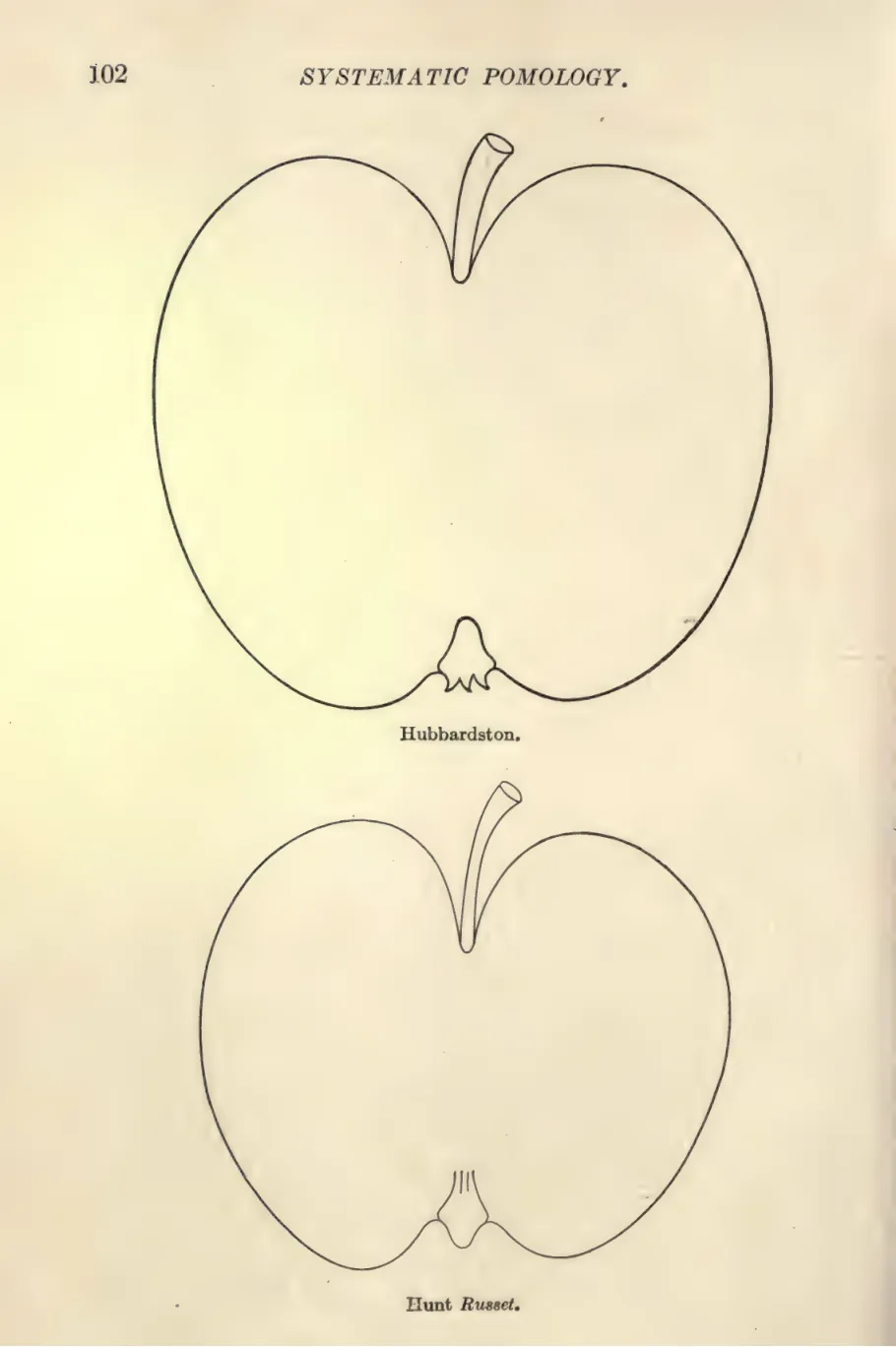
Hunt Russet
Origin / History
Hunt Russet originated on the farm of a Mr. Hunt (the Hunt family), near Concord, Massachusetts. Sources differ on its age: Downing states it originated "nearly 200 years since" (i.e., in the latter part of the seventeenth century); Beach, citing Mr. Wm. H. Hunt from whom specimen apples were obtained from the old Hunt farm, gives "at least 150 years ago"; Hedrick calls it "a favorite of a century and a half ago." Elliott simply gives the origin as "Mr. Hunt's Farm, Concord, Mass."
Being of excellent quality, the variety was cultivated and disseminated widely under different names. Downing states he was satisfied from experience and examination that Golden Russet of Mass., Fay's Russet, and Russet Pearmain are identical with the Hunt Russet, and that Hunt Russet is the original name. Downing notes there is said to be a distinct Russet Pearmain, but those he received as such from Connecticut many years since proved to be the Hunt Russet. He also distinguishes Hunt Russet from the Golden Russet of New York (or Western New York), which is quite distinct and is incorrectly called by some at the West "English Golden Russet." In New England, Beach reports, it has by some been called Golden Russet and American Golden Russet. Hovey identified it as Bullock, but incorrectly (per Beach, citing Hovey 1853, 1855, and Downing's 1875 Am. Pom. Soc. report).
Beach and Hedrick both note the variety was once considered a profitable market apple but is no longer; Beach adds it is not being planted in commercial orchards. Hedrick notes it is found in many old orchards in New England and New York. Elliott remarks it was "Little known at the West."
Tree
Tree moderately vigorous (Beach, Hedrick), or of moderate / rather slow growth (Downing, Budd-Hansen, Elliott). Hardy (Downing). Upright, spreading — upright when young and spreading when in bearing (Downing); upright-spreading (Beach, Hedrick, Budd-Hansen). Productive (Beach); an annual and good bearer (Downing, Budd-Hansen); bears annually and abundantly (Elliott).
Young shoots / twigs light reddish-brown, slightly grayish (Downing, Beach citing Downing 1872).
(Note: Downing's separate entry for "Golden Russet, of Massachusetts" — which Downing identifies as the same variety as Hunt Russet — describes the tree as vigorous, upright, and productive, with young shoots clear reddish brown.)
Fruit
Size: Medium, or below medium (Downing, Beach, Budd-Hansen, Hedrick, Lowther); small (Elliott; Hedrick also notes "medium or small"). Uniform (Beach, Hedrick).
Form: Roundish oblate, slightly conical (Downing, Budd-Hansen); a little oblate to distinctly conical, often elliptical, pretty uniform in shape (Beach); oblate to conical, often elliptical, uniform in shape (Hedrick); roundish (oblate) (Lowther); small, conic (Elliott).
Stem / Stalk: Short to medium, slender (Beach); short, slender (Hedrick); short, slender (Elliott); varying in length (Downing); varying (Budd-Hansen); small and short (Downing's Golden Russet of Massachusetts entry).
Cavity: Large, deep, acute (Downing, Budd-Hansen); large, acute or approaching acuminate, deep, broad, sometimes furrowed and compressed (Beach); large, acute, deep, broad, sometimes furrowed and compressed (Hedrick); deep and broad (Elliott).
Calyx: Partially open (Downing, Budd-Hansen); partly open or sometimes closed, with lobes medium in length, broad, obtuse (Beach); partly open or closed, with lobes medium in length, broad (Hedrick); closed, with segments long, recurved (Elliott). Segments medium, a little reflexed (Downing, Budd-Hansen).
Basin: Medium, slightly corrugated (Downing, Budd-Hansen); moderately deep to shallow, moderately narrow to rather wide, abrupt, slightly furrowed (Beach); deep to shallow, narrow to wide, abrupt, furrowed (Hedrick); round, open (Elliott).
Skin / Surface / Color: Yellow ground, mostly covered with thin dull russet, with a blush of bright rich red in the sun (Downing, Budd-Hansen). Golden russet with broken patches of smooth bright red on the cheek — quite attractive for a russet apple (Beach). Skin thick, rather tender, golden russet or with red russet cheek; patches of smooth skin breaking through the russet vary from yellow to bright deep red (Beach). Skin thin, tender, golden-russet or with red-russet cheek (Hedrick). Russet, shaded with dull red on a greenish yellow ground (Elliott). Yellow, russet (Lowther). (Note: Beach reports skin as "thick"; Hedrick reports skin as "thin" — sources disagree on skin thickness.)
Dots: Few, brown (Downing, Budd-Hansen); numerous, gray or russet (Beach, Hedrick).
Flesh / Flavor: Yellowish white, fine-grained, tender, juicy, rich, brisk subacid, slightly aromatic — very good or best (Downing, Budd-Hansen). Whitish tinged with yellow, rather fine, tender, juicy, subacid, sprightly becoming mild, not sweet as some have stated, very good to best (Beach). Yellow, fine, tender, juicy, subacid, sprightly becoming mild; very good to best (Hedrick). Juicy, fine grained, rather rich, sprightly, sub-acid flavor (Elliott). Quality very good (Lowther). Beach explicitly cautions the flesh is "not sweet as some have stated."
Core / Seeds / Internal: Core compact (Downing, Budd-Hansen). Calyx tube often long, funnel-shape; stamens basal; core small, axile; cells symmetrical, closed; core lines clasping the funnel cylinder; carpels roundish to elliptical, slightly emarginate; seeds dark, medium in size, plump, usually obtuse (Beach). Calyx-tube long, funnelshape; stamens basal; core small, axile; cells symmetrical, closed; core-lines clasping the funnel cylinder; carpels round to elliptical, emarginate; seeds dark, medium in size, plump, usually obtuse (Hedrick).
Season
December to April (Elliott). January to April (Downing, Budd-Hansen). January to April or later (Beach, Hedrick). Winter (Lowther). A good keeper (Beach); keeps remarkably well (Hedrick).
Uses
Both kitchen and market (Lowther). Once considered a profitable market apple but is so no longer (Beach, Hedrick); no longer considered profitable and not being planted in commercial orchards (Beach).
Subtypes / Variants
No distinct subtypes or sports of Hunt Russet are described. (Downing groups several names — Golden Russet of Mass., Fay's Russet, Russet Pearmain, etc. — as identical with Hunt Russet rather than as variants; these are treated as synonyms in the historical narrative above.)
Other
Lowther reports the variety's geographic distribution among reporting stations: Northern Division — 4 reporting stations (also reported in another division); Central Division — 2 reporting stations (also reported in another division); Southern Division — not reported.
Downing's separate "Golden Russet, of Massachusetts" entry, which he identifies as the same variety as Hunt Russet, gives the following additional fruit description: Fruit medium, roundish oblate, conic. Skin golden russet, with a sunny cheek. Stalk small and short, inserted in a deep cavity. Calyx nearly closed. Segments small, recurved. Basin deep, round, and open. Flesh yellowish white, tender, rich, mild, sweet subacid. Very good. January, April. Downing notes there are many Golden Russets about the country and it is difficult to identify them, and that this one is from Massachusetts and distinct from those grown in New York and the West. (Note: this entry's "mild, sweet subacid" flesh is at odds with Beach's explicit caution that Hunt Russet flesh is "not sweet as some have stated.")
Book Sources
Described in 7 period pomological works
- Budd & Hansen, Systematic Pomology (1914)
- Beach, The Apples of New York Vol. 1 (1905)
- Downing, Fruits and Fruit Trees of America (1900)
- Lowther (ed.), Encyclopedia of Practical Horticulture (1914)
- Hedrick, Cyclopedia of Hardy Fruits (1922)
- Elliott, The Western Fruit Book (1865) — listed as Hunt's Russet
- Thomas, The American Fruit Culturist (1903) — listed as Hunt's Russet
Nursery Catalog Sources
Found in 1 catalog (1901) from Illinois
- Benjamin Buckman (personal inventory) , Farmingdale , Illinois — 1901
View original book sources (7)
— F.R. Elliott, The Western Fruit Book (1865)Hunt's Russet.
Origin, Mr. Hunt's Farm, Concord, Mass. Growth, rather slow, bears annually and abundantly.
Fruit, small, conic ; skin, russet, shaded with dull red, on a greenish yellow ground ; stalk, short, slender ; cavity, deep and broad ; calyx, closed ; segments, long, recurved in a round open basin ; flesh, juicy, fine grained, rather rich, sprightly, sub-acid flavor. December to April. Little known at the West.
— A.J. Downing, The Fruits and Fruit Trees of America (1900)Hunt Russet Apple.
This favorite old apple is claimed, by those knowing it best, to have originated with the Hunt family, at Concord, Mass., nearly 200 years since; and, being of excellent quality, has been cultivated and disseminated widely under different names; and I am satisfied, from experience and examination, that Golden Russet of Mass., Fay's Russet, and Russet Pearmain are identical with the Hunt Russet, and that the latter is the original name, with the synonyms as stated below.
Hunt Russet. Golden Russet (not of N. Y.) New England Russet. Fay's Russet. Golden Russet of Mass. New England Golden Russet. Russet Pearmain. Mass. Golden Russet. Bullock's Pippin, or Sheepnose. American Golden Russet Golden Russet of New England. Incorrectly. of New England.
There is said to be a distinct Russet Pearmain; but those that I received as such from Connecticut, many years since, proved to be the Hunt Russet.
The Golden Russet of New York, or Western New York, is quite distinct, and is incorrectly called by some, at the West, English Golden Russet.
[Additional entry in this volume: "Golden Russet, of Massachusetts", pp. 221–221]
Golden Russet, of Massachusetts.
Tree vigorous, upright, and productive. Young shoots clear reddish brown.
Fruit medium, roundish oblate, conic. Skin golden russet, with a sunny cheek. Stalk small and short, inserted in a deep cavity. Calyx nearly closed. Segments small, recurved. Basin deep, round, and open. Flesh yellowish white, tender, rich, mild, sweet subacid. Very good. January, April.
There are many Golden Russets about the country, and it is difficult to identify them. This is from Massachusetts, and distinct from those grown in New York, and West.
[Additional entry in this volume: "Hunt's Russet", pp. 252–252]
Hunt's Russet.
Supposed to have originated with the Hunt family, of Concord, Mass., many years since. Tree hardy, moderate grower, upright, spreading when in bearing, an annual and good bearer. Young shoots light reddish brown, slightly grayish.
Hunt's Russet.
Fruit medium, or below, roundish oblate, slightly conic. Color yellow, mostly covered with thin dull russet, with a blush of bright rich red in the sun, few brown dots. Stalk varying in length. Cavity large, deep, acute. Calyx partially open. Segments medium, a little reflexed. Basin medium, slightly corrugated. Flesh yellowish white, fine-grained, tender, juicy, rich, brisk subacid, slightly aromatic. Very good or best. Core compact. January to April.
— John J. Thomas, The American Fruit Culturist (1903)Fay's Russet. See Hunt's Russet.
— S.A. Beach, The Apples of New York, Vol. 1 (1905)HUNT RUSSET.
References. 1. Hovey, Mag. Hort., 19:126. 1853. 2. Ib., 21:300. 1855. 3. Downing, 1857:143, 187. 4. Am. Pom. Soc. Cat., 1862. 5. Warder, 1867:720, 722. 6. Downing, 1872:196. 7. Downing, C, Am. Pom. Soc. Rpt., 1875:36. 8. Downing, 1876:53 app. 9. Thomas, 1885:240, 513. 10. Lyon, Mich. Hort. Soc. Rpt., 1890:292. 11. Bailey, An. Hort., 1892:241. 12. Budd-Hansen, 1903:101.
Synonyms. American Golden Russet of New England (8). BULLOCK (1, 2, but incorrectly). FAY'S RUSSET (3). Fay's Russet (8). Golden Russet (not of N. Y.) (8). GOLDEN RUSSET OF MASS. (4, 5, 6). Golden Russet of Mass. (8). Golden Russet of New England (8). Mass. Golden Russet (8). New England Russet (8). New England Golden Russet (8). RUSSET PEARMAIN (3, 9). Russet Pearmain (8).
Fruit medium size, golden russet with broken patches of smooth bright red on the cheek. It is quite attractive for a russet apple, excellent in quality and a good keeper. Tree moderately vigorous and productive. It is no longer considered profitable and is not being planted in commercial orchards.
Historical. The following description of the fruit was made from apples grown upon the old Hunt farm, Concord, Mass. Mr. Wm. H. Hunt, to whom we are indebted for these apples, states that the variety originated at least 150 years ago, and adds that it was once considered a profitable market apple but is so no longer. Downing (8) refers to it as an old favorite which is said to have originated in the latter part of the seventeenth century, and which has been widely disseminated under different names. In New England it has by some been called Golden Russet and American Golden Russet. Hovey identified it as Bullock but incorrectly (1, 2, 7).
Tree. Tree moderately vigorous, upright spreading. Twigs clear light reddish-brown, slightly grayish (6).
Fruit. Fruit medium or below, uniform. Form a little oblate to distinctly conical, often elliptical, pretty uniform in shape. Stem short to medium, slender. Cavity large, acute or approaching acuminate, deep, broad, sometimes furrowed and compressed. Calyx medium, partly open or sometimes closed; lobes medium in length, broad, obtuse. Basin moderately deep to shallow, moderately narrow to rather wide, abrupt, slightly furrowed. Skin thick, rather tender, golden russet or with red russet cheek. Patches of smooth skin breaking through the russet vary from yellow to bright deep red. Dots numerous, gray or russet. Calyx tube often long, funnel-shape. Stamens basal. Core small, axile; cells symmetrical, closed; core lines clasping the funnel cylinder. Carpels roundish to elliptical, slightly emarginate. Seeds dark, medium in size, plump, usually obtuse. Flesh whitish tinged with yellow, rather fine, tender, juicy, subacid, sprightly becoming mild, not sweet as some have stated, very good to best.
Season January to April or later.
— J.L. Budd & N.E. Hansen, American Horticultural Manual, Part II: Systematic Pomology (1914)Hunt Russet. — Supposed origin, Concord, Massachusetts; tree of moderate growth, upright, spreading, good annual bearer.
Fruit medium, or below, roundish oblate, slightly conical; surface yellow, mostly covered with thin dull russet, with a blush of bright rich red in the sun; dots few, brown; cavity large, deep, acute; stem varying; basin medium, slightly corrugated; calyx partially open; segments medium, a little reflexed. Core compact; flesh yellowish white, fine-grained, tender, juicy, rich, brisk subacid, slightly aromatic, very good to best. January to April.
— Granville Lowther (ed.), Encyclopedia of Practical Horticulture (1914)Hunt Russet. Size: medium. Form: roundish (oblate). Color: yellow, russet. Quality: very good. Use: both kitchen and market. Season: winter. Northern Division: 4 reporting stations (also reported in another division). Central Division: 2 reporting stations (also reported in another division). Southern Division: not reported.
— U.P. Hedrick, Cyclopedia of Hardy Fruits (1922)HUNT RUSSET. Golden Russet. New England Russet. Russet Pearmain. Hunt Russet, a favorite of a century and a half ago but now no longer planted, is found in many old orchards in New England and New York. The fruits are attractive, of excellent quality, and keep remarkably well. The variety takes its name from a Mr. Hunt upon whose farm, near Concord, Massachusetts, it originated.
Tree vigorous, upright-spreading. Fruit medium or small, uniform, oblate to conical, often elliptical, uniform in shape; stem short, slender; cavity large, acute, deep, broad, sometimes furrowed and compressed; calyx partly open or closed; lobes medium in length, broad; basin deep to shallow, narrow to wide, abrupt, furrowed; skin thin, tender, golden-russet or with red-russet cheek; dots numerous, gray or russet; calyx-tube long, funnelshape; stamens basal; core small, axile; cells symmetrical, closed; core-lines clasping the funnel cylinder; carpels round to elliptical, emarginate; seeds dark, medium in size, plump, usually obtuse; flesh yellow, fine, tender, juicy, subacid, sprightly becoming mild; very good to best; January to April or later.